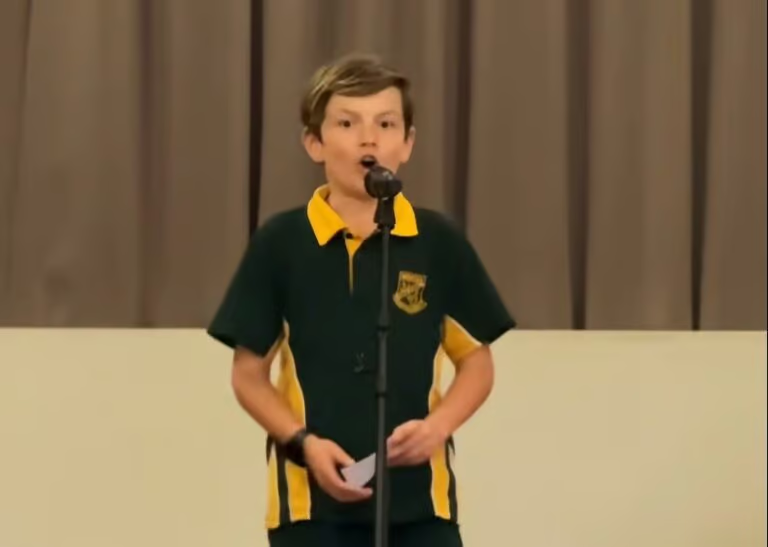
When a primary school student named Leo stepped onto the stage at his school and began speaking about autism, he could hardly have imagined the impact his words would have. In a speech that has since reached thousands online, Leo described himself as being like a “limited edition Lego set.”
“I’m not broken,” he told his audience. “I’m just built different.”
It was a moment of clarity and honesty from a young person still learning to navigate his identity. It struck a chord with families, peers, and professionals alike. Leo’s words have been embraced by parents of neurodivergent children who say their kids finally feel “seen.” They have also sparked a valuable conversation about how we talk about difference, inclusion, and support in schools and beyond.
Affirming difference as uniqueness
Leo’s metaphor challenges the assumptions that often sit beneath education and therapy. His perspective reflects the way we advocate at Stronger Together and that is, that neurodiversity is not something broken, but something unique, valuable and worthy of celebration
Connection over correction
For clinicians and educators, this shift in framing is important. Supporting children is not about correcting who they are, but about connecting with what they love and who they want to be. Whether it’s Lego, art, music, sport, or technology, shared interests provide natural pathways for learning, communication, and belonging.
Leo’s words remind us that when we focus on strengths and passions, children flourish and their sense of self grows stronger.
Elevating children’s voices|
The disability rights movement gave us the phrase “Nothing about us, without us.” It is a reminder that true inclusion means ensuring children are not spoken for, but spoken with. Leo’s speech is a powerful example of what happens when children are supported to share their own perspectives. It is also a lesson in the power of listening. Too often, conversations about autism and ADHD are led by adults interpreting behaviours. Yet when children are encouraged to tell their own stories, their insights are both profound and practical.
For clinicians and educators, this means creating opportunities for children to speak for themselves, and respecting their language and metaphors as valid expressions of identity.
Inclusion as a community responsibility
Leo credits his friends for accepting him as he is, even when he feels “weird or different.” His experience reminds us that inclusion is not just the responsibility of the child or the family. It is something that must be embedded in schools, communities, and systems.
Teachers, peers, and professionals all have a role to play in making sure that neurodivergent children are not only supported but celebrated.
A reflection for clinicians and educators
Leo’s speech invites us all to reflect on our own practice:
- As clinicians, are our therapy goals supporting belonging and self-advocacy as much as skill development?
- As educators, are our classrooms places where difference is valued, not just accommodated?
- As professionals, are we continuously questioning our language and assumptions to ensure they are truly neurodiversity-affirming?
Moving forward with purpose
At Stronger Together Foundation, our values are clear: to be inclusive, diverse, connected, purposeful, and passionate. Leo’s speech reminds us why those values matter. They challenge us to ensure every child feels seen as unique and not labelled as lacking.
Our role is not to “fix” children but to recognise and support the incredible designs they already bring into the world. By listening, connecting, and creating genuinely inclusive spaces, we can help more children grow up knowing what Leo so powerfully expressed: they are not broken, just built different.
If you haven’t seen Leo’s speech, watch it here https://www.tiktok.com/@lara.birdy/video/7553394886553111815